
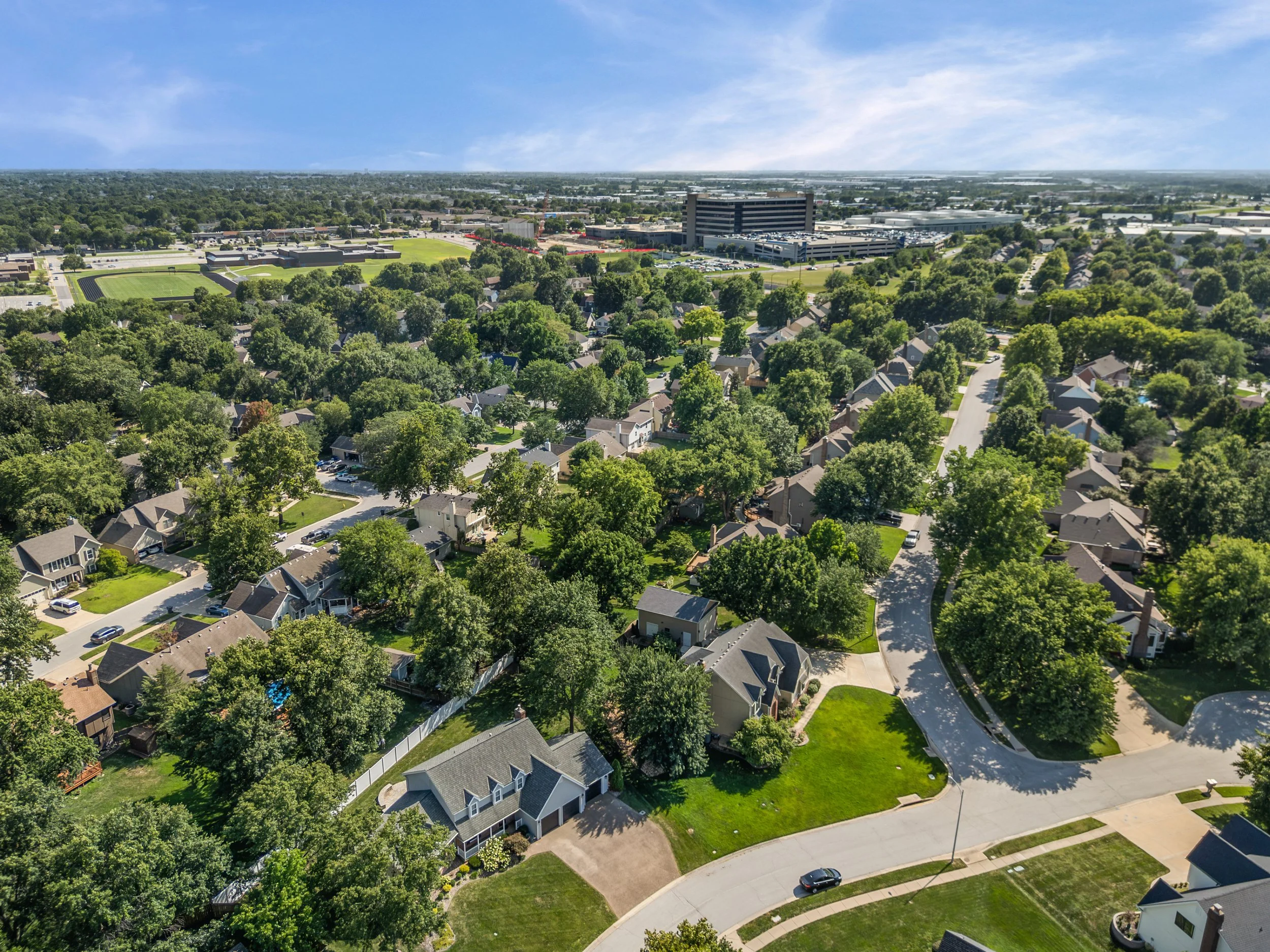
A backyard and an extra bedroom matter. So does the Tuesday morning drive to work, the grocery run after a long day, how quickly you can get to I-35, and whether the house still fits your life when things change again.
That's why deciding where to buy a home in Olathe takes more than picking the prettiest listing photos.
Olathe offers a lot of variety. You can find established neighborhoods with mature trees and traditional floor plans, newer communities with open-concept homes and neighborhood amenities, larger lots, smaller maintenance-friendly lots, and locations that can make very different parts of the Kansas City metro easier—or harder—to reach.
There isn't one “best” Olathe neighborhood. The right place depends on your budget, the type of home you want, where you regularly need to go, and what trade-offs you're willing to make.
Start With How You Actually Live
Before comparing neighborhoods, I want buyers to think beyond the house itself.
Where do you regularly need to go? How much driving are you willing to do? Do you want a larger yard, or would you gladly trade some outdoor space for less maintenance? Do you want an established home with mature landscaping, or would you rather have newer construction and modern finishes? Is an HOA with a pool and other amenities appealing, or would you rather have fewer rules and lower dues?
Also think about the house itself. Bedroom count, home-office space, lot size, garage space, stairs, storage, age and condition can all matter more to your daily experience than the name of the subdivision.
There is no universal best neighborhood. There is only the location and home that work well for the way you want to live without stretching your budget or patience too far.
What to Consider When Comparing Olathe Neighborhoods
A neighborhood can look perfect during a 20-minute showing and feel very different once you live there. Buyers are better served by looking past the model-home finishes and asking practical questions.
Location changes the whole calculation
Olathe covers a lot of ground. A home on the west side may offer a different commute pattern than one closer to I-35 or the eastern side of the city. If you regularly travel to Gardner, Spring Hill, Overland Park, or Kansas City, test the route at the times you would actually use it. A 10-minute difference each way can become a real quality-of-life issue over several years.
Pay attention to nearby roads, construction activity, train tracks, and commercial development. Being close to shopping and highways can be convenient, but it may also bring traffic and noise. A tucked-away cul-de-sac can be peaceful, though it may add time to every errand.
Home age brings trade-offs
Established Olathe neighborhoods often have larger trees, varied architecture, and homes that may offer more space for the price. They can also come with older roofs, mechanical systems, windows, drainage concerns, or deferred maintenance. None of that automatically makes a home a bad buy. It simply needs to be reflected in your inspection plan, repair expectations, and budget.
Newer communities can offer modern layouts, larger closets, energy-efficient features, and fewer near-term updates. The trade-off may be smaller lots, less mature landscaping, higher special assessments or HOA costs, and ongoing construction nearby. New does not mean maintenance-free, and older does not mean problematic. The details matter.
Amenities should match your habits
Pools, playgrounds, walking trails, and neighborhood events are appealing, but only if you will use them. Communities with stronger amenity packages may have higher HOA dues and more rules. Some homeowners appreciate the consistency. Others want fewer restrictions on fences, sheds, parking, or exterior changes.
Ask for the HOA documents early. Review dues, transfer fees, rental restrictions, pet rules, maintenance responsibilities, and any pending assessments. A good-looking neighborhood is not enough if the rules do not work for your household.
Olathe Areas Worth Comparing
Rather than treating Olathe as one market, it helps to compare areas by lifestyle and housing stock. Inventory shifts constantly, so the goal is not to chase a neighborhood name. It is to understand what each area tends to offer.
West Olathe and newer development
West Olathe includes everything from established communities such as Cedar Creek to newer development farther west and southwest. Depending on the location, buyers can find golf-course communities, larger homes and lots, newer subdivisions, townhomes and continuing new construction.
This part of town can make sense for buyers who want a newer feel and easy access toward Lenexa, Shawnee, or western Johnson County. It can also be competitive when well-priced homes come to market. If this is your target area, be ready to move quickly when the home checks the important boxes. Fast does not mean careless. It means having lending, inspection expectations, and offer strategy sorted out before the right property appears.
Central Olathe and Established Neighborhoods
Central Olathe gives buyers access to many established neighborhoods, services, parks, and everyday conveniences. You'll find mature landscaping, traditional floor plans, and homes with a wide range of updates and renovation levels. It can be a practical choice for buyers who care more about location and usable space than having every finish brand-new.
The key is separating cosmetic work from expensive work. Outdated paint or flooring is one thing. Foundation movement, water intrusion, aging sewer lines, or a roof near the end of its life are another. A thorough home inspection can help you understand the difference and decide which issues actually change the way you feel about the purchase.
Older doesn't automatically mean problematic, just as newer doesn't guarantee problem-free. What matters is understanding the condition of the particular home you're considering and making sure the price, expected maintenance, and potential repairs still make sense for you.
South Olathe and the Spring Hill Corridor
Southern Olathe has seen considerable residential and commercial development, and the Olathe-Spring Hill corridor gives buyers another set of trade-offs to consider. Depending on the neighborhood, you'll find newer construction, developing commercial areas and convenient routes toward Spring Hill, Gardner and southern Johnson County.
If your regular travel takes you south or southwest, the location can make a lot of sense. If most of your week takes you toward northern Johnson County or Kansas City, drive the route during the hours you'll actually use it. A location that looks only a few miles farther away on a map can feel very different during the morning commute.
Verify Schools, HOA Information and Other Details That Matter to You
If a specific school assignment matters to your purchase, verify it directly with the appropriate school district before making a decision. Attendance boundaries can change, and I don't want a buyer relying on an MLS entry, third-party website or something a neighbor remembers from several years ago.
The same principle applies to anything that's particularly important to you. Verify HOA rules and fees through the association documents. Check planned road projects with the city. Visit parks, trails and recreation facilities yourself. Test your commute during the hours you'll actually be driving it.
My job is to help you find the information and understand the real estate implications—not decide which school, commute, neighborhood or lifestyle should matter most to you.
See Homes Currently for Sale in Olathe
Want to see how these differences translate into actual homes? Browse current Olathe listings below to compare locations, prices, home ages, lot sizes and features.
Make the Budget Work Beyond the Purchase Price
The list price is only one piece of the decision. Compare property taxes, HOA dues, insurance, utilities, expected maintenance, and immediate improvements. A home that looks affordable at first can become a strain when it needs appliances, exterior repairs, window treatments, fencing, or a finished basement.
It also helps to separate wants from costs that protect the home. Fresh paint can wait. Correcting drainage, replacing a failing roof, or addressing safety concerns should not be brushed aside because you love the neighborhood.
A smart offer accounts for the property condition and the competition. Sometimes the strongest move is to pay more for a well-maintained home in the right location. Other times, a less polished home creates room to build equity through improvements. The answer depends on your cash reserves, timeline, and tolerance for projects.
See the Neighborhood More Than Once
If a home is a serious contender, visit at different times. Drive through on a weekday morning, during the evening commute, and later in the evening. Listen for traffic. Look at parking. Notice the condition of nearby homes and common areas. Check how long it takes to reach the places that shape your routine. I'm a big believer in seeing a neighborhood when you're not looking at the house. A showing can tell you a lot about the property, but you're probably only there for 30 or 45 minutes.
Drive the area again. Try your commute. Go to the grocery store you'd probably use. See what traffic looks like at 5:30. Drive through later in the evening. If being close to a particular park, restaurant, trail or highway matters to you, actually make the trip from the house.
You're not just buying the structure inside the property lines. You're choosing a location you'll interact with every day.
Talk straight about what you are seeing. If a house is priced aggressively, ask why. If the neighborhood has an HOA, review the documents. If the inspection identifies concerns, decide which ones are manageable and which ones change the deal. Good representation is not about talking you into a house. It is about helping you make a clear-eyed decision you can feel good about after the excitement wears off.
There isn't a neighborhood in Olathe that I can tell every buyer is the “best”—and I wouldn't trust an agent who tried.
What I can do is help you understand the differences. We can compare homes, prices, commute patterns, property taxes, HOA costs, housing age, condition, amenities and the other objective factors that matter to your decision.
Then you decide which trade-offs work for you.
The goal isn't for me to tell you where you should live. It's to give you enough information to confidently decide where you want to live.
If you're considering a move to Olathe, I'm happy to help you compare the options with local context, straight talk and zero pressure.
